



The acronym is simple: TIG stands for Tungsten Inert Gas. The formal engineering term used in AWS D1.1 and ISO standards is GTAW (Gas Tungsten Arc Welding).
But if you ask me, or any of the senior welders on my shop floor at RapidManufacturing, TIG stands for something else: “Time Is Gold.”
Why? Because TIG is the slowest, most difficult, and most expensive welding process we offer. It is also the only process that can produce X-ray quality welds on thin aluminum, magnesium, or titanium without fail.
As a procurement officer or a project engineer, you shouldn’t just care about what the letters stand for. You need to know why seeing “TIG Weld” on a print will double your labor costs—and why, for certain critical parts, it is absolutely worth every penny.

The “Anatomy” of the Process: Why it’s Different
To understand the cost, you have to understand the complexity. unlike MIG (GMAW), where the machine automatically feeds the wire and does 50% of the work, TIG is entirely manual. It is a “two-handed” process that requires the dexterity of a surgeon.
- Right Hand: Holds the torch. This controls the arc length (voltage). If the welder’s hand shakes by 1mm, the voltage fluctuates, and the heat input changes.
- Left Hand: Dips the filler rod. This controls the weld reinforcement. The welder must rhythmically “dab” the rod into the puddle.
- The Foot: Controls the amperage (current) via a pedal. This is the “gas pedal” for heat. As the part heats up, the welder must back off the pedal to prevent burn-through.
It is like conducting a symphony while melting metal. This is why a TIG welder usually commands a 30% higher hourly wage than a MIG welder.
The Tungsten Electrode (The “T” in TIG)
The core of this process is the Tungsten. Tungsten has the highest melting point of any pure metal (3,422°C / 6,192°F). It doesn’t melt into the weld; it just carries the electrical arc.
The Secret Weapon: AC Cleaning Action (Why Aluminum Needs TIG)
This is the section where most “Wiki-style” articles fail. They tell you TIG is good for aluminum, but they don’t tell you why.
Here is the engineering reality:
- Pure Aluminum melts at 660°C.
- Aluminum Oxide (the skin on the surface) melts at 2,072°C.
If you try to weld through the oxide without cleaning it, the underlying metal will melt while the skin stays solid. It’s like trying to melt ice inside a plastic bag without burning the bag.
TIG welding solves this using Alternating Current (AC).
- EP (Electrode Positive) Cycle: The electricity flows out of the metal plate. This acts like a sandblaster, physically ripping the oxide layer off the surface. We call this the “Cleaning Action.”
- EN (Electrode Negative) Cycle: The electricity flows into the metal, providing the deep penetration to fuse the joint.
The Invisible Hero: Shielding Gases (Argon vs. Helium)
The “IG” stands for Inert Gas. We use gas to shield the molten puddle from the atmosphere (oxygen and nitrogen). If air touches the molten metal, you get porosity (bubbles) immediately.
At RapidManufacturing, we don’t just use standard Argon. We engineer our gas mix based on your part:
- 100% Argon: The industry standard. Good for steel and thin aluminum. It provides a stable, quiet arc.
- Argon + Helium Mix: The “Turbo” mode. Helium has higher thermal conductivity. When we weld thick copper or heavy aluminum heat sinks, we add Helium to the mix. It makes the arc hotter and broader, allowing us to get deep penetration without pre-heating the part to death.
Note to Buyers: If your supplier is charging you extra for “Mixed Gas,” they aren’t ripping you off. Helium is expensive, but it ensures the weld root is fused.
Quality Control: The Defects We Watch For
TIG is clean, but it isn’t magic. There are specific defects that we inspect for under our magnification scopes.
Tungsten Inclusion
This is unique to TIG. If the welder accidentally touches the molten puddle with the tungsten tip, a tiny piece of tungsten snaps off and sinks into the weld.
- Why it matters: Tungsten is harder and denser than steel. On an X-ray, it shows up as a bright white spot. In service, this creates a stress concentration point where cracks begin.
- Our Standard: We have a Zero Tolerance policy for tungsten inclusions on aerospace and pressure vessel parts.
Porosity (The Sponge Effect)
This looks like tiny pinholes in the weld face. It usually happens because of a draft (wind) blowing away the shielding gas, or—more likely—dirty material.
- The TIG Rule: “If you can’t eat off it, you can’t TIG weld it.” We have to acetone-wipe and wire-brush every inch of the joint before the arc strikes.
Procurement Guide: TIG vs. MIG ROI Analysis
I often see prints for heavy structural steel brackets that specify “TIG Weld.” This is usually a mistake by a junior engineer who thinks “TIG = Better.” You are paying for a Ferrari to plow a field.
Here is the breakdown we use to help clients optimize their BOM (Bill of Materials) cost:
| Feature | TIG (GTAW) | MIG (GMAW) | The Bottom Line |
|---|---|---|---|
| Travel Speed | Slow (5-10 inches/min) | Fast (20-30 inches/min) | MIG is 3x Cheaper on labor time. |
| Aesthetics | The famous “Stack of Dimes.” Beautiful, clean. | Spatter is possible. Functional, but rougher. | Use TIG for visible “A-Side” surfaces. |
| Material Thickness | Excellent for < 1mm (Sheet Metal). | Burns through thin metal easily. | Use TIG for delicate electronics/enclosures. |
| Heat Input | Precise control. Less distortion. | High heat input. | Use TIG to prevent warping on precision machined parts. |
| Cleanliness | Surgical. No spatter to grind off. | Messy. Requires post-weld grinding. | Use TIG for medical/food devices. |
The “Stack of Dimes” Myth
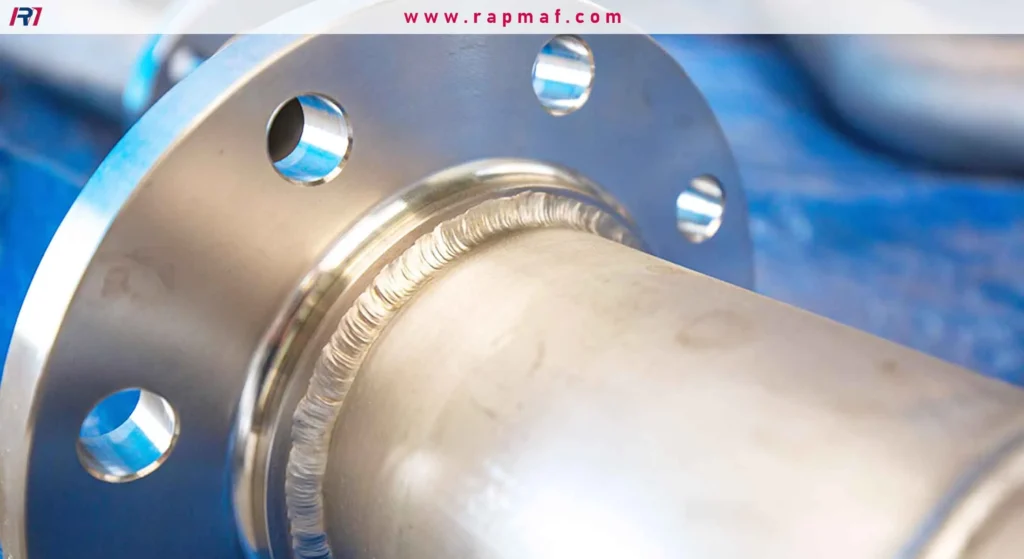
You have seen the photos on Instagram. The weld looks like a perfect stack of coins tipped over.
Warning: A pretty weld is not always a strong weld. In my 30 years, I have seen beautiful “stack of dimes” welds that had zero penetration into the root because the welder was too focused on the rhythm and not the heat.
This is why visuals aren’t enough. For critical joints, we perform Macroscopic Cross-Section Analysis. We cut the sample, polish it, and etch it with acid to prove that the “dimes” on top are actually fused to the metal below.
Frequently Asked Questions (FAQs)
Here are the questions my clients ask most often during our DFM (Design for Manufacturing) reviews.
Q: Is TIG welding stronger than MIG welding?
A: technically, no. If both are done perfectly with the correct filler metal, the tensile strength is identical (determined by the rod, not the process). However, TIG is cleaner and has fewer defects (like lack of fusion) on thin materials, which often makes it more reliable in real-world fatigue applications.
Q: Can you TIG weld rusty or dirty metal?
A: Absolutely not. TIG is extremely intolerant of contaminants. Oil, paint, rust, or anodizing will cause the arc to wander and the weld to explode with porosity. This adds to the cost: we have to prep and clean the material perfectly before we even turn the machine on.
Q: Why is my TIG quote so much higher than the MIG quote?
A: It comes down to Arc Time and Deposition Rate. A MIG welder can lay down 10 lbs of metal per hour. A TIG welder might lay down 1 lb per hour. You are paying for the precision and the aesthetic quality, not the bulk metal.
Q: Can you TIG weld dissimilar metals?
A: In some cases, yes (like Carbon Steel to Stainless Steel using 309 filler). But you cannot TIG weld Aluminum to Steel directly. For those applications, we recommend Vacuum Brazing or Friction Stir Welding, which we also support.
Summary: When to Pay the Premium
So, what does TIG mean?
It means Precision. It means Control. It means “No Grinding Required.”
It is the process we use when “good enough” isn’t an option. Use TIG for:
- Vacuum Chambers & Pressure Vessels: Where a single pinhole means failure.
- Food & Pharma Equipment: Where smooth welds prevent bacteria growth.
- Visual Parts: Where the weld is part of the design aesthetic.
If you are unsure whether your next project requires the precision of TIG or the speed of MIG, send us your CAD files. My team will review the joint geometry and suggest the most cost-effective path to a validated part.
References
- AWS D17.1/D17.1M:2017: Specification for Fusion Welding for Aerospace Applications. American Welding Society.
- Miller Welds: TIG Welding (GTAW) Guidelines. Miller Electric.
- The Aluminum Association: Welding Aluminum: Theory and Practice. Aluminum.org.







9 Responses