



I have seen thousands of CAD files for aluminum extrusions land on my desk.
50% of them are brilliant.
The other 50%? They treat aluminum like it’s plastic injection molding.
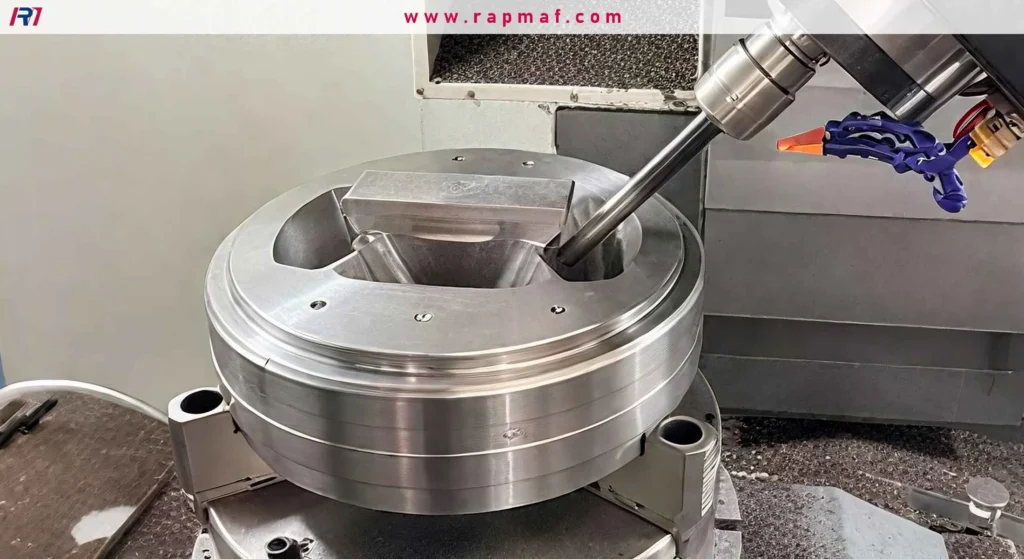
Here is the brutal truth: Extrusion is not molding. It is not machining. It is the art of pushing hot, toothpaste-like metal through a steel die under 2,000 tons of pressure.
If you respect the physics of the process, you get a cheap, strong, scalable part. If you fight the physics, you get twisted bars, broken dies, and a supplier (me) who has to charge you double.
This guide is not a wikipedia definition of “what is aluminum. This is a field manual on how to design profiles that actually work on the press.
The Alloys – Stop Defaulting to 6061
The biggest mistake I see procurement officers make is copy-pasting “6061-T6” onto every drawing because that’s what they use for CNC machining.
In the extrusion world, 6061 is not always king. It is harder to push, runs slower, and has a worse surface finish than other options.
The “Big Three” Extrusion Alloys
| Alloy | The Nickname | Strength (Yield) | Surface Finish | Best Use Case |
|---|---|---|---|---|
| 6063 | “The Architectural Alloy” | ~145 MPa (Lower) | Excellent | Window frames, visible trim, heatsinks. It anodizes beautifully. |
| 6061 | “The Structural Alloy” | ~240 MPa (High) | Good | Structural framing, vehicle chassis, parts that will be machined later. Stronger, but “graineir” surface. |
| 6005A | “The Hybrid” | ~225 MPa (Med-High) | Very Good | The secret weapon. Almost as strong as 6061, but extrudes faster and looks better. |
Clive’s Advice:
If your part is cosmetic (needs to look pretty) and doesn’t hold up a building, use 6063.
If you need high strength but also need complex thin fins (like a heatsink), 6061 might actually fail to fill the die. Switch to 6063 or 6005A.
Design Rules That Save Money
You can verify these rules with the Aluminum Association Design Guide, or you can just trust me and save yourself the reading time.
Rule #1: Wall Thickness Consistency (The “Uniformity” Rule)
In extrusion, metal flows like water. It wants to take the path of least resistance.
If your profile has one thick wall (5mm) and one thin wall (1mm), the metal will race through the thick part and crawl through the thin part.
- The Result: The profile will bow, twist, or tear as it exits the die.
- The Fix: Keep wall thicknesses as uniform as possible. If you must change thickness, create a gradual transition (taper), not a sharp step.
Rule #2: The Tongue Ratio (Don’t Snap My Die)
This is the most technical part of die design.
A “Tongue” is a piece of steel in the die that creates a deep, narrow channel in your aluminum part.
Imagine a long, thin finger of steel sticking out. As the aluminum flows around it, the pressure tries to snap that finger off.
- The Formula:
Tongue Ratio = Depth of Groove (W) / Width of Opening (Gap) - The Limit:
- For 6063 Alloy: Keep the ratio under 4:1.
- For 6061 Alloy: Keep the ratio under 3:1.
- The Consequence: If you design a 10mm deep groove that is only 1mm wide (10:1 ratio), the die will break. We will no-quote this design.
Rule #3: Screw Bosses (The Free Feature)
This is my favorite trick.
Instead of extruding a solid block and drilling holes later (expensive), design “Screw Bosses” directly into the profile.
A screw boss is a semi-circular channel extruded along the entire length of the part.
- Why do it? You don’t need to tap threads. You just screw a stainless steel self-tapping screw into the end. The screw cuts its own threads.
- Cost Savings: You just eliminated a secondary CNC drilling operation. That saves 0.50−1.00 per part.

Tolerances – Commercial vs. Precision
Extrusion is not CNC machining. You will not get +/- 0.01mm tolerances out of the press.
There are two standards we work to:
1. Aluminum Association Standard (Commercial)
This is the standard “off-the-shelf” tolerance.
- Typical Tolerance: +/- 0.15mm to 0.5mm (depending on size).
- Cost: Standard.
2. Precision Tolerance (Half-Commercial)
We can hold tighter tolerances, but it requires slower run speeds and more frequent die maintenance.
- Typical Tolerance: +/- 0.05mm to 0.1mm.
- Cost: +20% to +30%.
Clive’s Reality Check:
Does your window frame really need +/- 0.01mm precision? Probably not.
Design with “loose” tolerances in mind. If you need a super-tight fit, extrude it slightly oversized and let us CNC machine just that one critical surface. That is cheaper than trying to hold the whole profile to aerospace standards.
Surface Finishes & The “Die Line” Reality
Every extruded part comes out with Die Lines. These are microscopic streaks running along the length of the part, caused by the friction of the steel die.
1. Mill Finish (Raw)
- Appearance: Silver, slightly dull, visible die lines, potential oxidation over time.
- Use: Internal structural parts where looks don’t matter.
2. Anodizing (Clear or Color)
- Process: An electrochemical bath that creates a hard, protective oxide layer.
- Appearance: Matte, metallic look. Highly corrosion resistant.
- Warning: Anodizing does not hide die lines. It actually highlights them. If you need a perfect surface, we must mechanically polish or bead blast the part before anodizing.
3. Powder Coating
- Process: Spraying dry plastic powder and baking it.
- Appearance: Paint-like. Any color (RAL).
- Benefit: This hides the die lines and surface imperfections. It is often cheaper than high-end polishing + anodizing.
Calculating Costs (The Hidden Factors)
When you send us an RFQ, we look at three things to determine the price:
- CCD (Circumscribing Circle Diameter):
Imagine the smallest circle that can fit around your entire profile cross-section.- < 100mm: Cheap (Small press).
-
200mm: Expensive (Large press).
-
300mm: Very Expensive (Big specialized press).
- Tip: Keep your design compact.
- Weight per Meter:
Aluminum is sold by weight. Heavier profile = higher material cost.- Tip: Use hollow sections or ribs to reduce weight while maintaining stiffness.
- Complexity Factor:
Hollow profiles (tubes) are more expensive than solid profiles (bars) because the die is more complex (requires a “porthole die”).
FAQ: Common Questions from Engineers
Q: Can I extrude sharp corners?
A: No. Ideally, every corner should have a minimum radius of 0.2mm – 0.5mm. Sharp corners create stress in the die and lead to cracking. Plus, the aluminum doesn’t want to flow into a perfectly sharp corner.
Q: What is the minimum wall thickness?
A: For small profiles (CCD < 50mm), we can go down to 0.8mm – 1.0mm. For larger profiles, we need at least 1.5mm – 2.0mm. Anything thinner than that risks tearing.
Q: Why is my extruded tube slightly oval?
A: Because it’s hollow. As it cools, it relaxes. Unless you pay for secondary calibration (sizing), hollow profiles will always have a slight deviation from a perfect circle.
Conclusion: Let’s optimize Your Profile
Extrusion is the most cost-effective way to create constant-cross-section metal parts. But 80% of the cost is locked in during the Design Phase.
Don’t wait until you have paid for a $2,000 die to realize your tongue ratio is wrong.
Send your preliminary DXF or STEP file to my engineering team at Rapid Manufacturing. We will run a DFM (Design for Manufacturability) review, suggest alloy tweaks, and help you get the die right the first time.
References & Standards
Design rules and tolerance data in this guide are based on the following industrial standards. We recommend referencing these codes on your technical drawings to ensure quality control.
- Design Guidelines:
- Aluminum Extruders Council (AEC). The Aluminum Extrusion Manual.
- Note: This manual provides the technical basis for the “Tongue Ratio” and “CCD” calculations mentioned in Part 2.
- Material Properties:
- MakeItFrom. 6061-T6 vs 6063-T6 Properties Comparison.







14 Responses